How Should Plastic Extruder Degassing Gas Monitoring Be Designed.
A recycled-plastic line can produce pellets that look acceptable while volatile contamination is already moving through the degassing system. Odorous compounds, residual products from the material’s previous use and processing by-products may change from one feed batch to the next. If the plant waits for finished-pellet testing or complaints, it loses the chance to correct the process while the material is still in the extruder.
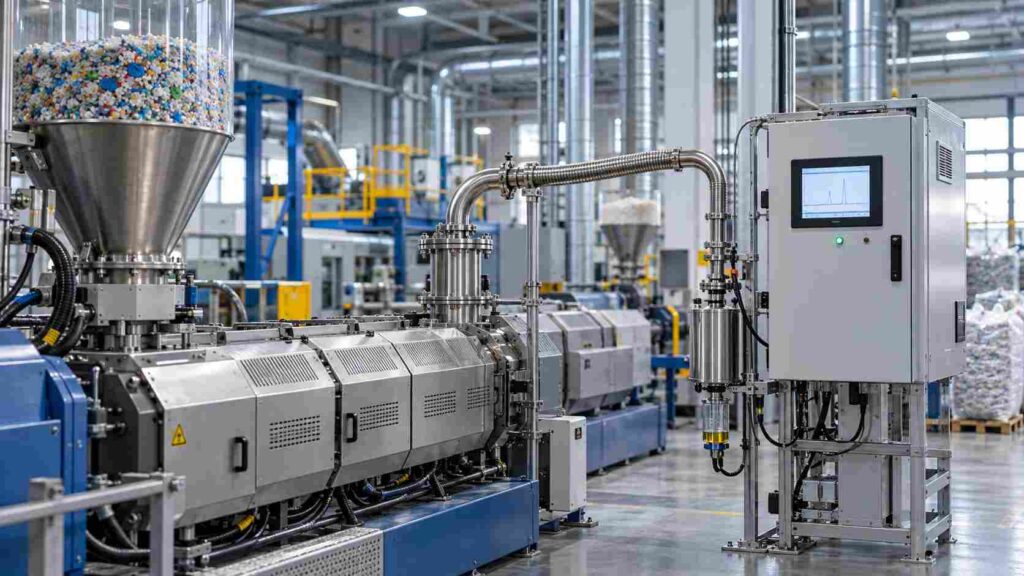
Plastic extruder degassing gas monitoring should combine a continuous indication of volatile loading with periodic compound-specific analysis and process data. The sampling system must preserve representative compounds across the expected range of volatility, polarity, temperature and pressure rather than relying on a universal VOC sensor or a single cold trap.
The most important engineering decision is how the gas is transferred from the process to the measurement. A detector can be sensitive and properly calibrated yet still deliver a biased result if water, oil or organic vapour condenses before analysis, or if the sample point does not represent the material being processed.


Comments
Post a Comment